


Digital Piano Buying Guide for Families

The wrong digital piano can make practice feel like a chore fast. Keys that feel too light, speakers that sound thin, or a layout that doesn’t support good technique can frustrate a beginner and leave parents wondering why motivation disappeared after a few weeks. A good digital piano buying guide should make that decision clearer, especially for families balancing budget, space, and long-term musical growth.
For most students, a digital piano is the practical starting point. It fits modern homes more easily than an acoustic piano, offers volume control for shared spaces, and usually costs less to own and maintain. But not every digital piano is built for the same player. Some are better for a young beginner taking first lessons, while others make more sense for an advancing student who needs a stronger piano feel and better sound.
What matters most in a digital piano buying guide
When families shop for a digital piano, they often focus on price first. That’s understandable, but the better question is whether the instrument supports steady progress. A lower-priced model can seem like a smart savings upfront, but if it has unweighted keys or a weak pedal setup, a student may outgrow it quickly.
The most important feature is the keyboard action. If your child is learning piano seriously, look for fully weighted keys with hammer action. That helps build finger strength and control in a way that feels much closer to an acoustic piano. Semi-weighted or synth-style keys may be fine for casual keyboard use, but they usually aren’t the best fit for traditional piano lessons.
The next factor is sound. A digital piano should produce a piano tone that feels full and responsive, not brittle or flat. Better models also respond more naturally to touch, so students hear a difference between soft playing and stronger accents. That dynamic range matters because it teaches expression from the beginning, not just note accuracy.
Pedals are another detail parents sometimes overlook. Many entry-level instruments include a small, lightweight pedal that slides around the floor. It works, but it doesn’t feel much like a real piano pedal. If a student is likely to continue lessons, a furniture-style model with integrated pedals often provides a better experience and better posture.
Choosing the right digital piano for your space
A digital piano should fit your home and your routine, not just your wish list. For some families, portability matters because the instrument may need to move between rooms or fit into a shared living space. In that case, a slab-style digital piano on a sturdy stand can work well.
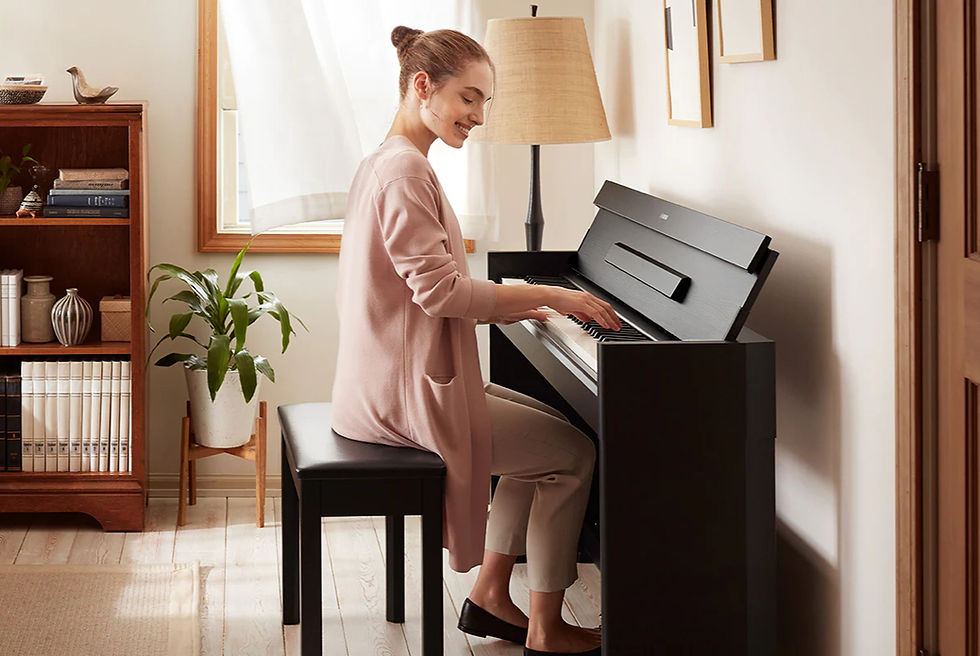
For others, a console digital piano makes more sense. These models are designed to feel more permanent, with a built-in stand, better pedal setup, and a look that blends into a family room or study. They usually take up more space, but they also tend to feel more like a dedicated piano rather than a temporary practice station.
Think honestly about where the instrument will live. A digital piano tucked into a busy hallway or set up on an unstable stand often gets used less. A comfortable bench, good lighting, and a quiet corner can make a surprising difference in how often a student sits down to practice.
How much should you spend?
This is where it really depends on your goals. If you’re buying for a brand-new beginner and want a reliable first instrument, there are quality entry-level digital pianos that cover the essentials without pushing into premium pricing. The key is making sure the basics are right: 88 weighted keys, realistic touch, dependable sound, and a sustain pedal setup that supports lessons.
If the player is already committed, or if you know the instrument will be used daily for several years, moving up in quality can be worth it. Midrange models often offer stronger speakers, improved key action, better sound samples, and a more stable cabinet. Those upgrades may not seem dramatic in a showroom, but over time they create a more satisfying practice experience.
For serious students and adult players, higher-end digital pianos can come surprisingly close to the feel and musical response of an acoustic piano. That doesn’t mean everyone needs to spend at the top of the category. It means the best value is usually found where the instrument matches the player’s actual level and likely growth.
Features that are helpful and features that are mostly extra
Many digital pianos come loaded with features, and not all of them matter equally. Built-in metronomes are genuinely useful. Headphone capability is one of the biggest advantages of owning a digital piano, especially in homes with siblings, homework, or varying schedules. Recording functions can also help students hear their own progress more clearly.
On the other hand, hundreds of instrument voices and flashy accompaniment patterns are not usually what make a piano better for learning. They can be fun, and there’s nothing wrong with that, but they shouldn’t distract from the core experience of playing piano well. For most families, touch, tone, and reliability matter more than a long list of extras.
Bluetooth and app integration can be helpful if used well, especially for theory practice or occasional learning support at home. But they should be considered a bonus, not the main reason to choose one model over another.
A digital piano buying guide for beginners versus advancing players
A true beginner needs consistency and ease of use. The instrument should turn on quickly, sound good immediately, and feel close enough to an acoustic piano that lesson skills transfer naturally. Complicated menus and too many buttons can actually be discouraging for younger students.
An advancing player needs more nuance. That includes better repetition in the action, more detailed touch response, and stronger pedal realism. As students begin working on phrasing, dynamics, and more advanced repertoire, they notice the difference between a serviceable beginner instrument and one that really supports musical expression.
Adult beginners are a slightly different case. Many adults stick with piano because they’ve chosen it for themselves, so comfort and aesthetics can matter more. A console model with a more polished look and a better speaker system may encourage longer-term use simply because it feels inviting to sit down and play.
Common mistakes to avoid
One common mistake is buying a keyboard instead of a digital piano. The words get used interchangeably in casual conversation, but they’re not the same thing. A portable keyboard with 61 keys and light action may be fine for general music exploration, yet it usually won’t support proper piano development the way an 88-key weighted digital piano will.
Another mistake is buying too far ahead. Parents sometimes try to solve the next ten years in one purchase. It’s smart to think long term, but not every seven-year-old beginner needs an advanced model designed for a highly committed pianist. Buy for the student in front of you, with enough quality to allow room to grow.
The opposite mistake also happens. Some families choose the cheapest possible option, hoping to upgrade later if lessons stick. Sometimes that works, but sometimes the instrument itself becomes part of the reason a child loses interest. Poor key feel and weak sound can make even a motivated student less excited to practice.
Finally, don’t ignore the bench, stand, and pedal arrangement. Good playing posture starts with proper setup. If the bench height is wrong or the pedal is awkwardly placed, the student may develop habits that teachers have to correct later.
Why in-person guidance still helps
Specifications tell part of the story, but feel matters. Two digital pianos with similar feature lists can play very differently. One may feel steady and natural, while another feels springy or artificial. That’s hard to judge from a product description alone.
For families in the area, visiting a trusted local store can make the process much easier. Being able to compare key action, cabinet style, sound, and size in person often leads to a better decision and more confidence. At Naperville Music, that conversation is usually less about selling the fanciest model and more about helping each student start with an instrument that fits their goals, home, and budget.
A good digital piano should make practice easier to begin and easier to continue. It should invite a student back to the bench, whether they’re working through first-note exercises or preparing for a recital piece. If you choose with that in mind, you’re not just buying an instrument - you’re creating a better place for music to grow.
Only You Can Decide
Ultimately, only you can determine what is the “best value” for your family because it is the one that you find feels the most musical and satisfying to play and best fits your budget. Trying models from different manufacturers will help you determine how you respond to the core material emphasis, tonal balance, the engineered action as well as the touch profile of different instruments. That comparison is the best way to find your ideal piano.
Many value conscious buyers looking for the biggest bang for their dollar often also consider a pre-owned piano as it may offer a superior value choice over buying a new piano. A pre-owned model from a respected brand may offer the same professional structural features at a significantly lower price. Check out our posts on why a quality pre-owned piano may be a good value for your family, and also, what to watch out for when buying a piano from a private party.
Finally, many players often consider a digital piano. Check out our post on the differences between an acoustic and a digital piano and be sure to check out our digital pianos on our website and in our showroom.
Explore our new and pre-owned pianos at:
About Naperville Music
Naperville Music has been a trusted piano dealer in the Chicago area for over 50 years. Naperville Music offers new acoustic pianos from Pearl River Pianos, and Ritmuller Pianos. We also offer Digital Pianos from Yamaha, Roland and Pearl River, as well as pre-owned instruments from most major manufacturers including Yamaha, Kawai, Baldwin, Roland, Casio and others.
We are a family-owned business located conveniently to Naperville, and the Chicago Suburbs, be sure to check out our modern piano showroom before you make your piano purchase.
For more piano information, including helpful videos and detailed product descriptions, visit https://www.napervillemusic.com/pianos-and-keyboards
Naperville Music's qualified and friendly staff are available to discuss your piano needs with no obligation, via email, live chat, phone, or in person.
Naperville Music
1-630-355-1404 x106 (Ask for Nate)
Use Our Live Text To Chat

Text 1-630-354-0625 to chat online with Nate for more details
The information and views expressed in our blog posts are gathered from various sources and are consistent with the views of Naperville Music. Pianos, whether new, used, or digital are a very personal purchase and you should experience any piano to be sure it meets your specific needs before you purchase one.


Comments