


Digital Piano Versus Keyboard for Beginners
A child is ready to begin piano lessons, an adult wants to return to music, and the first question often becomes: digital piano versus keyboard - which one belongs at home? They may look similar from across a room, but they encourage very different playing habits. Choosing well can make daily practice more enjoyable, more productive, and easier to maintain.
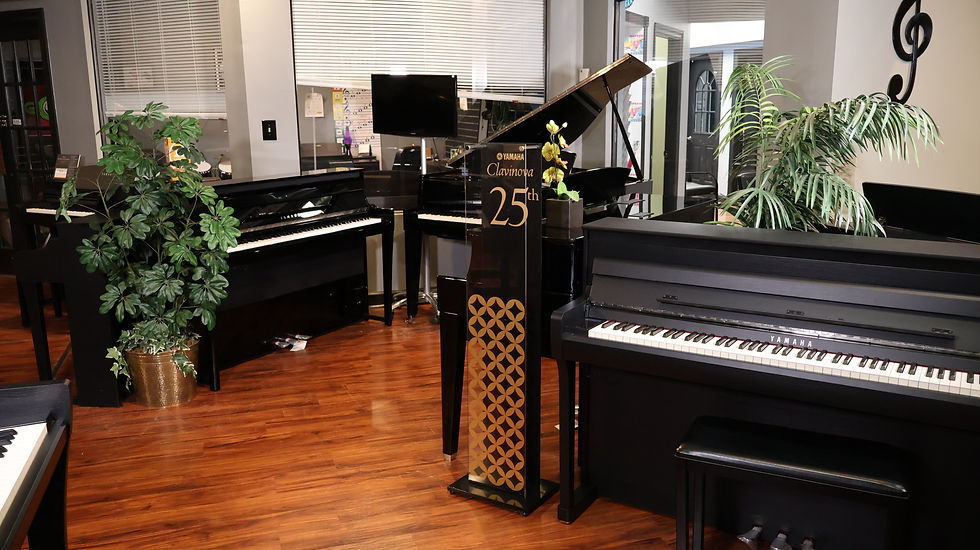
For many families, the best choice is not simply the least expensive instrument or the one with the most buttons. It is the instrument that fits the player's goals, available space, budget, and willingness to practice. A keyboard can be a smart and flexible starting point. A digital piano can offer a much closer connection to the technique used on an acoustic piano.
Digital Piano Versus Keyboard: The Core Difference
The biggest difference is the playing experience. A digital piano is designed to recreate the feel and sound of an acoustic piano. Most models have 88 keys, weighted or hammer-action keys, sustain-pedal capability, and piano-focused sounds. Its purpose is straightforward: help the player develop piano skills without needing an acoustic piano in the home.
A keyboard is usually lighter, smaller, and more versatile. It may have 61, 76, or 88 keys, but its keys are often unweighted or lightly weighted. Keyboards commonly include many sounds, built-in rhythms, accompaniment features, recording options, and educational functions. They are made for portability and musical variety as much as traditional piano playing.
Neither option is automatically better. A student taking weekly piano lessons and learning classical, jazz, or contemporary repertoire will usually benefit from a digital piano. A child interested in experimenting with sounds, songwriting, pop music, or carrying an instrument between rooms may be happier with a keyboard.
Digital Piano Versus Keyboard for Beginners.
Why Key Feel Matters More Than Most Families Expect
When a pianist presses an acoustic piano key, they are moving a small hammer mechanism. Weighted digital piano keys are built to imitate that resistance. The keys generally feel heavier in the lower register and lighter in the upper register, much like an acoustic instrument.
That resistance helps students build finger strength, control dynamics, and learn how to shape a melody. Playing softly, playing loudly, and making one hand stand out from the other are essential skills. A digital piano gives a beginner more opportunity to develop those habits from the start.
Many keyboards respond to touch as well, meaning the sound changes depending on how firmly a key is played. That is a useful feature, but it is not the same as weighted action. A touch-sensitive keyboard can support early learning, especially for younger children or casual players, yet students may notice a transition when they later play an acoustic piano at school, a recital, or a teacher's studio.
For a young beginner, comfort also matters. Some children find full-weighted keys tiring at first. With encouragement and good practice routines, most adapt well. Still, if a student is very young, has limited hand strength, or is mainly exploring whether piano is a lasting interest, a quality keyboard can be a reasonable first step.
Number of Keys and What Students Need
An 88-key digital piano has the same key range as a standard acoustic piano. This matters more as students advance. Many lesson books begin in a central range, but music gradually expands in both directions. By the time a student reaches more developed arrangements, fewer keys can become limiting.
A 61-key keyboard is compact and common. It works well for simple melodies, basic chords, classroom activities, and many popular songs. A 76-key model provides more room and may be a practical middle ground for a player who needs portability but wants additional range.
Families do not need to buy beyond a student's needs just to check a box. But if piano lessons are the plan, an 88-key digital piano can prevent an early upgrade. It gives a student room to grow through several levels of instruction and makes home practice feel more consistent with the instrument they may use in lessons or performances.
Sound, Speakers, and Musical Possibilities
Digital pianos tend to place their attention on a convincing piano sound. Better models use detailed samples and speaker systems that create a fuller, more natural tone. They often include a few additional sounds, such as electric piano, organ, strings, or bass, but the acoustic piano experience remains the center of the design.
A keyboard is often the more playful choice. Players can switch among instruments, add drum patterns, layer sounds, or use automatic accompaniment. Those features can inspire a student who loves creating their own music. They can also make a beginner feel like they are playing with a band rather than practicing alone.
There is a trade-off. Extra features are exciting, but they can become distractions for a student who needs to focus on rhythm, reading, hand position, and steady practice. Parents can keep that balance by setting aside time for lesson assignments first, then allowing time to explore sounds and songs afterward.
Both instruments can be used with headphones, which is a genuine advantage for busy households. Headphones allow early-morning practice, late-evening playing, and a little more peace in shared living spaces. Look for an instrument with a comfortable headphone connection and controls a child can manage without frustration.
Space, Portability, and Setup at Home
A keyboard is typically easy to move, store, and take to a friend's house, school event, or rehearsal. If space is tight or the instrument needs to be packed away regularly, that convenience matters. A sturdy stand is essential, though. A wobbly stand or a keyboard placed on a bed or kitchen table does not support good posture or relaxed technique.
Digital pianos range from portable slab-style instruments to furniture-style consoles with a built-in stand and pedal unit. A console model has a more permanent presence, but it can make practice feel like a regular part of family life. It also usually provides a more stable bench height and a better pedal setup.
Before purchasing, measure the intended area and think about the complete setup. The player needs enough space for a bench, proper arm movement, music books, and a clear path in and out of the room. A modest, well-organized practice corner is more useful than an impressive instrument squeezed into an uncomfortable spot.
Budgeting for the Right First Instrument
Price is part of every decision, but value is often more helpful than a single number. A basic keyboard may cost less upfront and be exactly right for a family testing a new interest. A digital piano generally costs more because of its action, full key range, cabinet or stand, speakers, and piano-oriented design.
Consider the supporting items, too. A bench at the correct height, a sustain pedal, headphones, and a stable stand can make a significant difference. A cheap pedal that slides across the floor or a chair that is too high can make playing uncomfortable and affect technique.
If a student is enrolled in ongoing lessons, it is often worth choosing an instrument that supports those lessons over time. Frequent practice on a weighted 88-key digital piano can build skills that transfer naturally to acoustic pianos. On the other hand, a well-made keyboard is better than waiting indefinitely for the perfect setup. Consistent time at the keys is what turns interest into progress.
A Simple Way to Choose
Start with the student's main goal. If the goal is to learn piano technique, read music, prepare for recitals, or eventually play an acoustic piano confidently, choose a digital piano with 88 weighted keys and a sustain pedal. This is the most dependable path for many school-age piano students.
If the goal is portable music-making, exploring sounds, writing songs, or learning basic melodies and chords in a smaller space, a keyboard may be the better fit. Choose one with touch-sensitive keys when possible, and make sure it has enough keys for the music the player hopes to play.
It also helps to let the musician sit down and try both. Notice the key response, the sound through the speakers, the bench or stand height, and whether the controls feel inviting rather than confusing. An instrument should encourage a player to come back tomorrow.
A first instrument does not have to be a forever instrument. Families can begin with a sensible choice, build a practice routine, and upgrade when a student's commitment and musical needs become clearer. At Naperville Music, the most rewarding part is seeing that first choice become the place where a beginner gains confidence, a family hears new songs around the house, and a musician finds reasons to keep playing.
Only You Can Decide
Ultimately, only you can determine what is the “best value” for your family because it is the one that you find feels the most musical and satisfying to play and best fits your budget. Trying models from different manufacturers will help you determine how you respond to the core material emphasis, tonal balance, the engineered action as well as the touch profile of different instruments. That comparison is the best way to find your ideal piano.
Many value conscious buyers looking for the biggest bang for their dollar often also consider a pre-owned piano as it may offer a superior value choice over buying a new piano. A pre-owned model from a respected brand may offer the same professional structural features at a significantly lower price. Check out our posts on why a quality pre-owned piano may be a good value for your family, and also, what to watch out for when buying a piano from a private party.
Finally, many players often consider a digital piano. Check out our post on the differences between an acoustic and a digital piano and be sure to check out our digital pianos on our website and in our showroom.
Explore our new and pre-owned pianos at:
About Naperville Music
Naperville Music has been a trusted piano dealer in the Chicago area for over 50 years. Naperville Music offers new acoustic pianos from Pearl River Pianos, and Ritmuller Pianos. We also offer Digital Pianos from Yamaha, Roland and Pearl River, as well as pre-owned instruments from most major manufacturers including Yamaha, Kawai, Baldwin, Roland, Casio and others.
We are a family-owned business located conveniently to Naperville, and the Chicago Suburbs, be sure to check out our modern piano showroom before you make your piano purchase.
For more piano information, including helpful videos and detailed product descriptions, visit https://www.napervillemusic.com/pianos-and-keyboards
Naperville Music's qualified and friendly staff are available to discuss your piano needs with no obligation, via email, live chat, phone, or in person.
Naperville Music
1-630-355-1404 x106 (Ask for Nate)
Use Our Live Text To Chat

Text 1-630-354-0625 to chat online with Nate for more details
The information and views expressed in our blog posts are gathered from various sources and are consistent with the views of Naperville Music. Pianos, whether new, used, or digital are a very personal purchase and you should experience any piano to be sure it meets your specific needs before you purchase one.


Comments