


What Do Piano Repair Costs Usually Include?
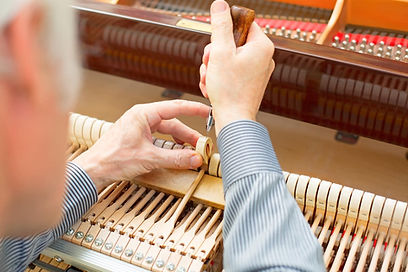
A piano can look perfectly fine in the living room and still need attention beneath the keys. A note may ring too long, a pedal may squeak, or a child may notice that a key no longer returns after practicing. Piano repair costs depend on the problem, the piano’s age and condition, and the amount of work needed to make the instrument reliable again.
For families, students, and longtime players, the goal is not simply to find the lowest price. It is to understand what the piano needs, what service can reasonably wait, and when an experienced technician can help protect an instrument that has become part of the family’s musical life.
What affects piano repair costs?
Pianos are complex mechanical instruments. An acoustic piano has thousands of individual parts, including strings, hammers, dampers, felt components, action parts, and a soundboard. Small changes in humidity, regular use, long periods without service, or a move to a new home can affect how those parts work together.
That is why two pianos with the same symptom may not have the same repair bill. A sticky key, for example, could be caused by a minor alignment issue, swollen wood from humidity, a foreign object under the keys, or a worn action component. The repair itself may be quick, or it may require careful diagnosis and adjustment.
The biggest factors usually include the piano type, overall age, maintenance history, access to the instrument, and whether the technician can address the issue during a standard service visit. Upright pianos and grand pianos have different action designs, and older instruments sometimes need parts that are no longer readily available. A piano that has not been tuned or serviced for many years may also reveal more than one concern once the work begins.
Common piano service costs and what they cover
A professional piano tuning is often the starting point for maintaining an acoustic piano. Many households schedule tuning once or twice a year, especially when students practice regularly or when seasonal temperature and humidity changes are noticeable. A piano that has fallen significantly out of tune may need a pitch raise before it can receive a precise final tuning, which can add time and cost.
Minor repairs are often handled alongside regular service. These can include correcting sticky or sluggish keys, tightening loose hardware, adjusting a pedal, replacing small felt pieces, or addressing a note that does not sound properly. In many cases, the technician can explain whether the repair is a simple adjustment or whether a worn part needs replacement.
More involved action work can cost more because it requires detailed labor. The action is the mechanism that transfers a player’s touch from the key to the hammer. If a piano feels uneven, plays too loudly or softly, repeats poorly, or has several nonworking notes, it may need regulation. Regulation adjusts the many moving parts so the piano responds consistently from one end of the keyboard to the other.
Voicing is another service that may be recommended for a piano with a harsh, overly bright, or uneven tone. This work changes the character of the sound by carefully shaping and treating the hammers. It is especially worthwhile for dedicated students and experienced players who are frustrated by a piano that sounds unpleasant even when it is in tune.
When a repair becomes a restoration decision
Older pianos can hold deep sentimental value. They may have belonged to a grandparent, introduced a child to playing music, or served as the centerpiece of countless family gatherings. But sentimental value and repair value are not always the same thing.
A restoration can involve replacing strings, rebuilding the action, repairing or refinishing cabinet components, restoring pedals, or addressing structural concerns. This level of work can be a meaningful investment for a high-quality instrument with a strong musical foundation. It may be less practical for a lower-grade piano with major issues in the pinblock, soundboard, bridges, or action.
Before approving an extensive repair, ask for a clear assessment of the piano’s condition and likely outcome. Will the work improve playability for a beginning student? Will it make the piano dependable for years? Is the cost close to the value of a better-maintained used piano or a newer instrument? Honest answers to those questions help families make decisions they will feel good about.
Why delaying service can cost more later
Not every piano concern is urgent, but ignoring a problem can allow it to spread. One sticking key may be a small adjustment today. If the underlying cause is moisture, pests, or deteriorating action materials, additional keys may eventually be affected. A broken string may also signal that neighboring strings are under similar stress, particularly on an older piano.
Regular service is less about chasing perfection and more about preventing avoidable surprises. For a student, a piano that stays in tune and responds predictably makes practice more rewarding. It supports good technique, accurate listening, and the confidence that comes from hearing progress clearly.
Illinois weather makes consistent care especially helpful. Indoor humidity shifts can affect wood and felt parts, while a dry winter heating season can change how a piano feels and sounds. Keeping the instrument away from direct heat vents, exterior doors, sunny windows, and damp basement conditions can reduce strain between appointments.
Questions to ask before scheduling piano repair
A good service conversation starts with a few practical details. Share the piano’s make, approximate age, and whether it is an upright, console, studio piano, or grand. Mention when it was last tuned and describe the issue as specifically as possible. If several keys stick or a pedal does not work, say so before the appointment.
It also helps to ask whether a service call includes an evaluation, whether parts and labor are priced separately, and whether the technician expects the work to be completed in one visit. For larger repairs, request an estimate before authorizing work. A written description of the recommended repair gives you a useful basis for deciding whether to proceed now or plan for it later.
Be cautious with any quote that is offered without asking about the piano or its symptoms. Straightforward pricing can be helpful, but a responsible technician should recognize that piano repairs are not one-size-fits-all. The condition of the individual instrument matters.
Repairing, replacing, or upgrading your piano
For a child beginning lessons, a modest repair may be all that is needed to make a family piano enjoyable and functional. For an advancing student, however, inconsistent touch, unstable tuning, or an unpleasant tone can become a real obstacle. At that point, comparing repair costs with replacement or upgrade options is sensible.
Digital pianos create a different set of choices. They do not require tuning, but they can develop problems with keys, pedals, speakers, power supplies, or electronics. Depending on the model and issue, repair may be worthwhile, particularly for a quality instrument. For an older entry-level keyboard with a major electronic failure, replacement can sometimes be the more practical route.
Naperville Music has served local musicians for more than 50 years, and the best next step is often a straightforward conversation about how the piano is being used. A family preparing for first lessons needs a dependable starting point. A serious pianist may need a more responsive instrument. Both deserve advice that considers the music ahead, not just the repair in front of them.
A well-cared-for piano can support years of practice, recitals, holiday songs, and quiet evenings at home. When something feels or sounds wrong, addressing it early gives the instrument its best chance to keep serving the player who sits down at the bench.
Only You Can Decide
Ultimately, only you can determine what is the “best value” for your family because it is the one that you find feels the most musical and satisfying to play and best fits your budget. Trying models from different manufacturers will help you determine how you respond to the core material emphasis, tonal balance, the engineered action as well as the touch profile of different instruments. That comparison is the best way to find your ideal piano.
Many value conscious buyers looking for the biggest bang for their dollar often also consider a pre-owned piano as it may offer a superior value choice over buying a new piano. A pre-owned model from a respected brand may offer the same professional structural features at a significantly lower price. Check out our posts on why a quality pre-owned piano may be a good value for your family, and also, what to watch out for when buying a piano from a private party.
Finally, many players often consider a digital piano. Check out our post on the differences between an acoustic and a digital piano and be sure to check out our digital pianos on our website and in our showroom.
Explore our new and pre-owned pianos at:
About Naperville Music
Naperville Music has been a trusted piano dealer in the Chicago area for over 50 years. Naperville Music offers new acoustic pianos from Pearl River Pianos, and Ritmuller Pianos. We also offer Digital Pianos from Yamaha, Roland and Pearl River, as well as pre-owned instruments from most major manufacturers including Yamaha, Kawai, Baldwin, Roland, Casio and others.
We are a family-owned business located conveniently to Naperville, and the Chicago Suburbs, be sure to check out our modern piano showroom before you make your piano purchase.
For more piano information, including helpful videos and detailed product descriptions, visit https://www.napervillemusic.com/pianos-and-keyboards
Naperville Music's qualified and friendly staff are available to discuss your piano needs with no obligation, via email, live chat, phone, or in person.
Naperville Music
1-630-355-1404 x106 (Ask for Nate)
Use Our Live Text To Chat

Text 1-630-354-0625 to chat online with Nate for more details
The information and views expressed in our blog posts are gathered from various sources and are consistent with the views of Naperville Music. Pianos, whether new, used, or digital are a very personal purchase and you should experience any piano to be sure it meets your specific needs before you purchase one.


Comments